

Dr. Lavranos on AI Meets the Firm: How Artificial Intelligence Is Shaping the Future of Medical Malpractice Law at Acuity Medical Law
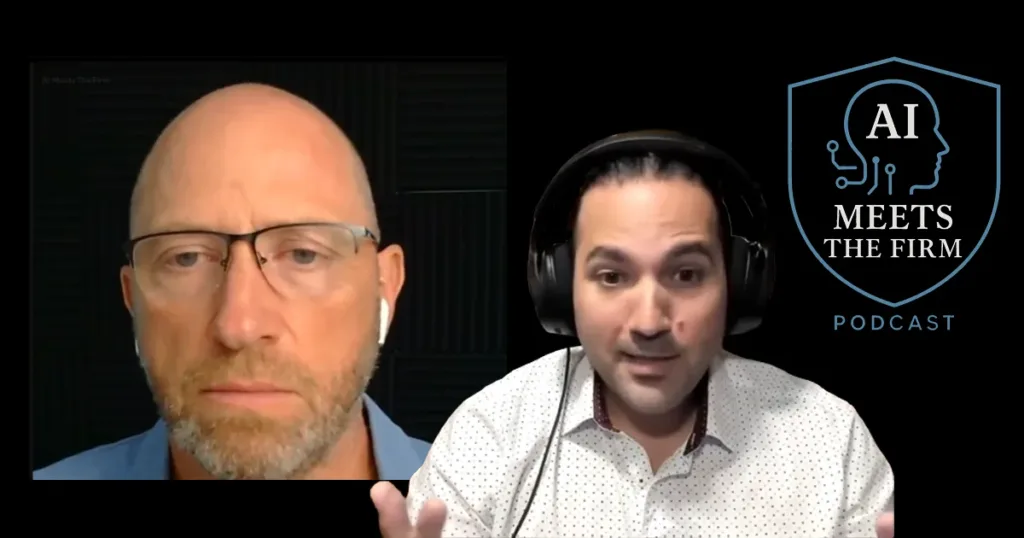
We are proud to share that our founder, Dr. Aris Lavranos, was recently featured as a guest on AI Meets the Firm, a podcast hosted by Julian White that explores how artificial intelligence is transforming professional services firms across the country. The episode offered Dr. Lavranos an opportunity to speak candidly about how we practice law at Acuity Medical Law, the role AI plays in our day-to-day work, and our vision for the future of medical malpractice representation in Atlantic Canada.
We believe the conversation touches on questions that matter deeply to our clients and to anyone who has ever wondered whether the legal system is truly accessible to ordinary Canadians. We encourage you to listen to the full episode and have provided our own commentary and key takeaways below.
Who We Are and Why We Built This Firm
For those who are new to Acuity Medical Law, our firm was founded on a premise that remains rare in Canadian law: that the lawyer handling your medical malpractice case should have the same depth of medical knowledge as the clinicians whose conduct is being scrutinized. Dr. Lavranos graduated from medical school at Dalhousie University in 2012 and completed his residency and fellowship in family and emergency medicine at McMaster University. He has practiced emergency medicine for over a decade and continues to do so today alongside his legal practice.
When Dr. Lavranos went to law school, his intention was to pursue policy or political work. What changed that was his exposure to civil litigation and, in particular, the world of medical malpractice. His years in clinical practice had given him an intimate understanding of how medical errors occur, how they are documented, and how rarely patients are positioned to recognize them on their own. The principles of access to justice, remedy, and compensation resonated with him in a way that made the path forward clear.
After articling with a focus exclusively on medical malpractice and personal injury, Dr. Lavranos founded Acuity Medical Law. Our contingency fee model means our clients pay nothing unless we recover on their behalf. More importantly, operating as a dedicated boutique firm gives us the freedom to take on cases that larger firms often decline: cases of lower monetary value that nonetheless represent genuine harm to real people. That commitment to access to justice is not incidental to what we do. It is the reason we exist.
The Role of AI in Our Practice
During the podcast, Dr. Lavranos spoke at length about how central artificial intelligence has become to the way we work at Acuity Medical Law. He uses AI tools for four to five hours every working day, across virtually every dimension of our practice. He describes AI as functioning like a language calculator, a personal assistant, a scribe, and a junior associate that is always available and consistently useful for accelerating the volume and quality of our output.
There are four areas where we find AI most valuable. The first is writing and document production. AI allows us to draft, edit, and refine correspondence and legal documents far more efficiently than traditional methods, freeing up time for the analytical and strategic work that truly requires legal and medical expertise. The second is the analysis of medical records. Medical malpractice cases routinely involve hundreds (sometimes thousands) of pages of clinical documentation. AI helps us quickly identify key physicians, medication histories, comorbidities, and critical page references, giving us a strong foundation from which to begin our own detailed review. The third is legal research. AI has multiplied our capacity to digest case law and legislation, reducing the time required to understand complex judicial reasoning by as much as five to ten times. The fourth is client documentation: transforming detailed intake notes into structured, professionally formatted summaries suitable for third parties, defense counsel, and the courts.
The cumulative effect of these efficiencies is meaningful. Dr. Lavranos estimates that AI enables him to handle a volume of work that would otherwise be impossible for a sole practitioner. That capacity translates directly into greater access to justice for our clients across Atlantic Canada.
Where We Draw the Line: The Limits of AI in Medical Legal Work
We believe it is just as important to be clear about what AI cannot do as it is to celebrate what it can. On the podcast, Dr. Lavranos was forthright about the boundaries of AI in our work, and we want our clients and the public to understand how we think about this.
The most important thing AI cannot replace is the clinical and legal judgment we bring to investigating a case. When a client comes to us believing they were harmed during a surgery, the error may have nothing to do with the surgeon. It may lie in the anaesthesia, in post-operative nursing care, in the recovery unit, or in whether proper informed consent was obtained before the procedure ever began. Identifying where negligence actually occurred requires someone who understands medicine from the inside, someone who has stood in an emergency department, read thousands of charts, and knows what proper clinical practice looks like and what a departure from that standard means. AI can summarize a chart efficiently, but it cannot replicate that judgment. We do not ask it to.
Handwritten medical records present a further practical limitation. A significant portion of the clinical documentation we review is handwritten, and AI struggles considerably with the interpretation of clinical handwriting without the contextual knowledge a trained clinician brings. Our review of every record remains thorough and personal.
On the legal research side, we exercise significant caution around AI-generated case citations. AI tools can suggest relevant legal principles and point us in useful directions, but they are known to fabricate case names, misattribute holdings, and conflate facts from different decisions. There have been well-documented instances of lawyers relying on AI-generated citations without verification and facing serious consequences before the courts as a result. At Acuity Medical Law, every case citation we use is independently verified. We do not present anything to a court that has not been confirmed through authoritative legal research databases. Our clients’ cases and our professional obligations demand nothing less.
AI as a Strategic Sounding Board
One aspect of how we use AI that Dr. Lavranos discussed openly on the podcast is its role as an analytical sounding board. As a sole practitioner, he does not have senior colleagues down the hall to pressure-test arguments or review pleadings before they go out. AI has partially filled that role, allowing him to stress-test legal arguments, identify weaknesses in a position, and approach our work with an additional layer of critical scrutiny.
He was also candid about a well-known limitation of AI in this context: its tendency to agree rather than challenge. Without deliberate prompting, AI tools default to validation rather than critique. We address this directly by consistently instructing the AI to be more challenging and critical, refreshing those instructions throughout a session as needed. Used this way, AI becomes a genuinely useful tool for sharpening our thinking rather than simply reflecting it back to us.
What We Are Watching: The Future of AI in Medical Malpractice Law
Looking ahead, we are most excited about the emergence of specialized AI tools built specifically for legal practice. General-purpose AI has taken us a long way, but purpose-built platforms trained on comprehensive legal corpora (particularly for Canadian case law research) have the potential to dramatically improve the accuracy and depth of legal research in ways that general tools currently cannot match.
We are also watching the development of predictive litigation analytics with considerable interest. Tools that can assess the relative strength of a case against the landscape of existing precedent could meaningfully change how settlement negotiations unfold, giving both plaintiff and defense counsel a more grounded basis for evaluating risk. We believe this will ultimately benefit clients on both sides by reducing the uncertainty and cost of litigation and encouraging earlier, fairer resolutions.
Our Broader Vision: AI as a Force for Access to Justice
Perhaps the most important theme Dr. Lavranos raised on the podcast is one that goes beyond the walls of our firm. He spoke about AI as a democratizing force, one that is already beginning to reshape the relationship between ordinary Canadians and the professional systems that govern their health and their legal rights.
For too long, patients have deferred almost entirely to the authority of their physicians, often without the information or confidence to ask critical questions. And for too long, Canadians who suspected they had been harmed by medical error lacked the tools to assess their situation before approaching a lawyer. AI is changing both of those realities. It is empowering people to arrive at medical appointments better informed, to ask more substantive questions, and to understand their own health in ways that were previously available only to those with professional training. In our legal context, it is giving prospective clients a greater ability to understand their circumstances before they ever speak with us.
We welcome that shift. An informed client is a better client, not because it makes our job easier, but because it means the people who come to us have a clearer sense of what happened to them and what they are hoping to achieve. That foundation makes the attorney-client relationship stronger and the pursuit of justice more effective.
AI is also leveling the playing field between boutique firms like ours and the large institutional practices that have historically held an advantage through sheer resource depth. The research capacity, documentation quality, and analytical thoroughness that once required teams of lawyers and support staff are increasingly accessible to a well-equipped sole practitioner. We believe clients will come to recognize this, and that the personal attention, direct access, and genuine expertise that a firm like Acuity Medical Law provides will become increasingly valued as that resource gap closes.
Serving Atlantic Canada — Now and Into the Future
Acuity Medical Law practices throughout Atlantic Canada, including Nova Scotia, New Brunswick, Prince Edward Island, and Newfoundland and Labrador. We handle medical malpractice and personal injury matters on a contingency fee basis, meaning there is no cost to you unless we recover on your behalf. Dr. Lavranos personally reviews every case we take on.
If you or someone you love has been harmed by medical error and you are not sure whether you have a case, we encourage you to reach out. The combination of clinical knowledge, legal expertise, and the best available technology means that when you come to Acuity Medical Law, you are getting representation that is built for exactly this kind of work. The future of accessible, high-quality medical malpractice law in Atlantic Canada is something we are committed to, and with tools like AI continuing to evolve, we have never been better positioned to deliver on that commitment.
